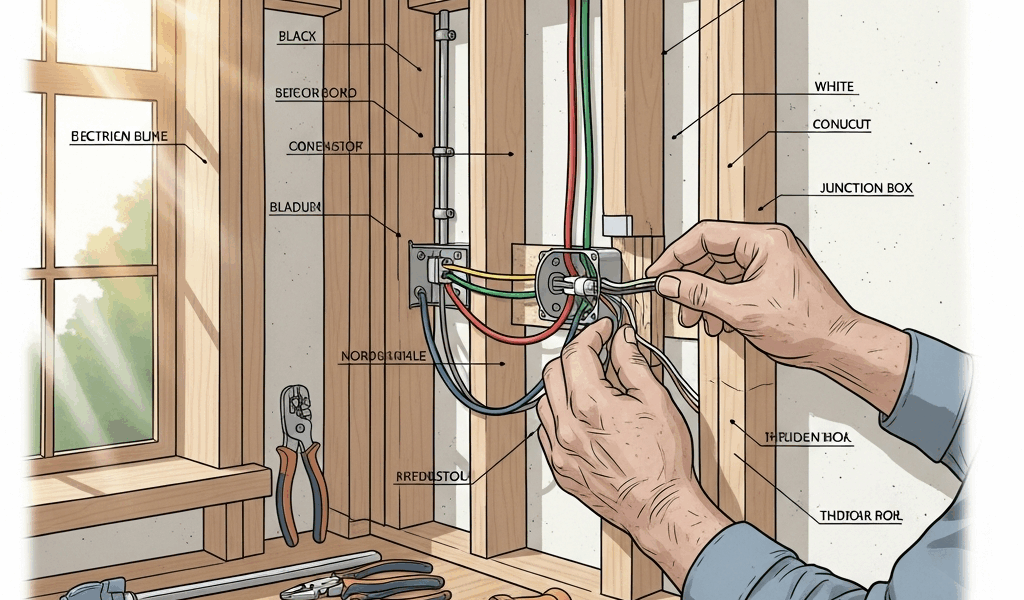
The best trade school for a Veteran is not a national brand with a military-friendly badge. It is the shortest credible path to a specific license or job in the Veteran’s local market, with the exact program approved for GI Bill benefits, transparent total costs, acceptable completion outcomes, and credits or credentials employers recognize.
This guide replaces unverified school rankings, salary promises, placement rates, and fixed housing estimates with a repeatable way to find and compare VA-approved trade programs. No school is “best” until its current program approval, licensing alignment, costs, schedule, and local employer value have been checked.
Best Trade Schools for Veterans: Quick Answer
Start with public community or technical colleges, employer-sponsored registered apprenticeships, union or industry training centers, and established nonprofit or private career schools. Then verify each exact location and program in the VA GI Bill Comparison Tool. A school-level approval does not prove that every certificate, campus, online format, or start date is covered.
| Program type | Potential strength | Main risk to check |
|---|---|---|
| Public technical or community college | Lower tuition, recognized credit, stackable certificates | Waitlists, limited lab schedules, licensing alignment |
| Registered apprenticeship | Paid work, progressive wages, mentor and portable credential | The specific sponsor must also be approved for GI Bill use |
| Union or employer training center | Direct connection to work and occupation standards | Entry testing, geographic limits, job placement conditions |
| Private career school | Frequent starts and focused training | Higher net price, credit transfer, closure or caution flags |
| Online or hybrid technical program | Schedule flexibility | Hands-on requirements, licensing acceptance, housing rules |
Trade Programs the GI Bill May Cover
VA says eligible students may use education benefits for approved non-college-degree programs such as HVAC repair, truck driving, emergency medical technician training, barbering, and cosmetology. Other possibilities can include welding, electrical technology, plumbing, machining, diesel or automotive service, medical assisting, and industry certification preparation—but only when the exact program is approved.
GI Bill benefits can also support approved on-the-job training and apprenticeships. A registered apprenticeship combines paid work, related instruction, mentorship, progressive wage increases, and an industry-recognized credential. Registration with the Department of Labor or a state agency is valuable, but it does not automatically establish VA approval. Search the employer or sponsor in VA’s tool and confirm approval with the program’s certifying official.
How to Find VA-Approved Trade Schools
- Define one occupation. “Skilled trades” is too broad. Choose a target such as electrician, HVAC technician, welder, commercial driver, surgical technologist, or industrial maintenance technician.
- Check state requirements. Identify the license, supervised hours, examination, background check, medical clearance, or commercial driving requirements that apply where you intend to work.
- Search VA’s official tool. Enter the full school, campus, employer, or apprenticeship sponsor name. Review approval and caution information.
- Confirm the exact program. Ask the school certifying official whether your credential, location, delivery format, and start term are currently approved.
- Compare at least three paths. Include a public college or technical school and an apprenticeship when available, not only private schools appearing in advertisements.
- Get written cost and completion details. Ask for tuition, mandatory fees, tools, uniforms, exams, licensing charges, program length, schedule, refund rules, and likely student responsibility.
Eight Checks Before Enrolling
1. Exact VA Approval
Look beyond “we accept the GI Bill.” Confirm the facility code and exact program with the certifying official. Approval can differ by campus or program. Save the answer and the date.
2. Licensing Alignment
Ask the relevant state licensing board whether the program satisfies education or hour requirements. A credential that does not lead to the required exam or supervised-work pathway can waste both entitlement and time.
3. Accreditation and Credit Transfer
VA warns that not every approved program is accredited. Accreditation may be crucial for licensing, financial aid, or credit transfer. Ask the receiving institution—not just the current school—whether it would accept the credits. Programmatic accreditation may matter in health and other regulated fields.
4. Total Net Cost
Compare the full student cost, not the advertised tuition. Include registration, lab, technology, tools, personal protective equipment, uniforms, background checks, drug screening, physicals, licensing exams, transportation, and retesting. Ask which charges the school expects VA to certify and which remain yours.
5. Completion and Employment Evidence
Ask for the denominator and reporting period behind any placement claim. “Employed” may include jobs outside the trained field, students already employed, or graduates the school could contact. Request completion, licensure-exam pass, and in-field placement data separately. Verify likely wages through state labor-market data and the Bureau of Labor Statistics rather than treating a recruiter’s top-earner example as typical.
6. Caution Flags and Complaints
Review VA’s Comparison Tool for caution flags, school closures, regulatory scrutiny, and complaint information. A flag requires investigation; it should not be dismissed because an admissions representative says the issue is old or administrative.
7. Schedule and Attendance Rules
Trade programs often use clock hours, labs, cohorts, and strict attendance. Ask how missed labs, military duty, illness, course failure, or a schedule change affects completion, certification, refunds, and potential VA debt.
8. Employer Recognition
Call several local employers who are not supplied by the school. Ask whether they hire graduates from the program, which credentials they require, whether apprenticeships are preferred, and what entry-level applicants usually lack. This check is often more useful than a generic “veteran friendly” award.
Trade School Versus Registered Apprenticeship
A classroom program can make sense when it is required for licensure, provides expensive equipment and supervised labs, or is the fastest recognized entry path. An apprenticeship can be stronger when employers hire directly into paid training and the credential is portable. Some occupations combine both.
Department of Labor guidance describes registered apprenticeship as paid employment with mentorship, progressive wage increases, classroom instruction, and a nationally recognized credential. Qualifying Veterans in an approved program may receive GI Bill benefits in addition to apprentice wages. VA payments for on-the-job training and apprenticeship generally change as wages progress, so do not budget a fixed monthly amount for the full program.
Compare the opportunity cost as well as tuition. A short private program can still be more expensive than a longer public program when tools, financing, low completion rates, or weak employer acceptance are included. Conversely, a strong apprenticeship may have limited openings or require travel and irregular work hours.
How GI Bill Payments Work for Trade School
For an approved non-college-degree program, Post-9/11 GI Bill payment depends on factors including benefit level, scheduled clock hours, training location, enrollment dates, and active-duty status. VA publishes current rate rules and annual limits. Use those official rules rather than a school’s old “BAH” estimate.
The education payment is a monthly housing allowance, not an active-duty housing entitlement, and the actual calculation can vary with training format and dates. Students at half-time or less may not receive a housing payment, and partial months are prorated. Online-only training is treated differently. Active-duty students and spouses using transferred benefits may also face different housing rules.
Benefits do not automatically cover every tool, exam, uniform, or optional charge. If you have a service-connected disability, consider speaking with VA about Veteran Readiness and Employment before committing Post-9/11 GI Bill entitlement. VR&E eligibility and an approved rehabilitation plan are individual determinations; neither admission nor a disability rating alone guarantees coverage.
Trade School Comparison Worksheet
| Decision field | Program A | Program B | Program C |
|---|---|---|---|
| Exact credential and campus | |||
| VA approval confirmed by | |||
| State licensing alignment | |||
| Program length and weekly schedule | |||
| Tuition and mandatory fees | |||
| Tools, exams and uncovered charges | |||
| Completion and exam-pass evidence | |||
| In-field placement methodology | |||
| Local employers contacted | |||
| Credits or credential portability | |||
| Estimated student responsibility |
Questions to Ask the School Certifying Official
- Is this exact program at this exact location approved for my benefit chapter?
- Is the current cohort eligible, and are there any 85/15 enrollment restrictions?
- Which tuition, fees, tools, and supplies will the school certify?
- How are clock hours and attendance reported?
- What happens financially if I withdraw, fail a module, or change cohorts?
- When will enrollment and tuition be certified?
- Are there unresolved caution flags, teach-out plans, or accreditation changes?
Use our GI Bill school selection guide for the broader comparison process, review GI Bill rules for trade schools and certifications, and compare online programs carefully when hands-on training or licensing is involved.
Trade Schools and GI Bill FAQ
Will the GI Bill pay for trade school?
It may pay for an approved non-college-degree, apprenticeship, or on-the-job training program. Eligibility and payment depend on the benefit and exact approved program.
Does VA approval mean the school is good?
No. Approval concerns benefit use; it does not guarantee accreditation, credit transfer, licensure, completion, job placement, salary, or suitability.
Can I receive GI Bill benefits during an apprenticeship?
Qualifying students may receive benefits in an apprenticeship approved for GI Bill use. Registration alone is not enough; verify the sponsor in VA’s tool.
Which trade pays Veterans the most?
There is no universal answer. Region, licensing, union status, overtime, experience, working conditions, and specialization affect pay. Compare local wage distributions and openings, not national maximums.
Should I use VR&E instead?
Possibly, if you are eligible and the training fits an approved rehabilitation plan. Speak with VA before using GI Bill months if VR&E may fit your circumstances.
Official Sources
- VA non-college-degree programs
- VA GI Bill Comparison Tool
- VA Principles of Excellence
- VA current Post-9/11 GI Bill rates
- Department of Labor registered apprenticeship overview
- Bureau of Labor Statistics Occupational Outlook Handbook
This guide is general planning information, not a VA eligibility or payment decision, licensing determination, legal or financial advice, or guarantee of school approval, completion, employment, wages, or benefit coverage. Verify the current program with VA, the school, the licensing authority, and prospective employers.
Trade programs may lead to separate licenses or industry credentials. Our GI Bill-approved certifications guide explains how to verify exams, prep courses and training independently.