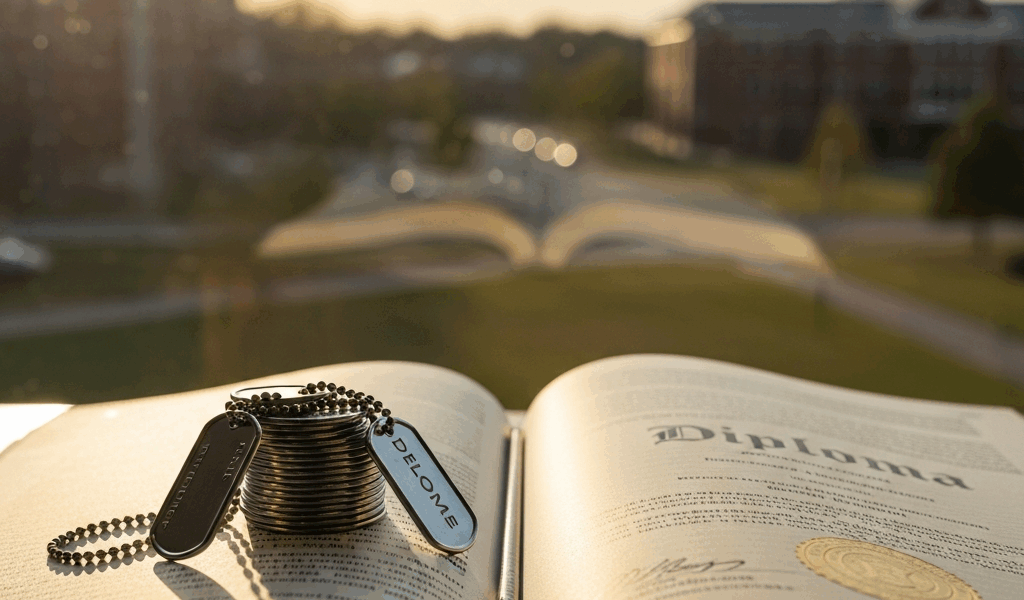
Why Veterans Choose HBCUs
The HBCU-for-veterans conversation has gotten complicated with all the noise flying around about rankings, tuition costs, and which schools have the fanciest veteran centers. As someone who spent months talking with student veterans, military education advisors, and enrollment staff at a dozen campuses, I learned everything there is to know about what actually makes these institutions work for people coming out of service.
What I didn’t expect to find: veterans actively choosing smaller HBCUs over massive flagship state universities with sprawling ROTC infrastructure. Not by accident. On purpose. There’s a real pattern here—and it makes sense once you see it.
Class sizes matter more than any admissions brochure will tell you. At most HBCUs, your upper-level courses have 15 to 25 students instead of 200. That means your professor knows your name. Knows you served. Knows the difference between transition anxiety and just sleeping through lecture. I watched this firsthand at one campus where a chemistry professor quietly adjusted a deadline for a veteran managing PTSD symptoms—no formal accommodation request, no paperwork chain. She just knew the student. That’s the whole thing, right there.
The mentorship culture runs deep—genuinely deep, not brochure-deep. HBCUs were built on the idea that education isn’t transactional. The senior who graduated five years ago is still picking up your calls. Still making introductions. Still showing up. For veterans navigating a civilian career landscape that doesn’t automatically translate military experience into value, that network is worth more than people realize.
Veterans at HBCUs also report feeling part of the broader institutional story rather than a special population requiring management. Many of these schools were founded in the years immediately following the Civil War and Reconstruction—and many have hosted military service across generations. That context creates a different emotional baseline. You’re not an accommodation. You’re a veteran at a school that understands something about resilience.
Small residential campuses help too. Most HBCUs aren’t sprawling across thousands of acres with satellite buildings nobody can find. I spent an afternoon in the dining hall at Howard University once—watched veteran students calling out to each other across the room, introducing new people, giving each other grief about some professor’s pop quiz. It wasn’t manufactured community. It was just Tuesday.
Top 10 Military-Friendly HBCUs — Ranked
Probably should have opened with a disclaimer here, honestly. Ranking schools is imperfect. A veteran pursuing nursing has completely different priorities than someone going into aerospace engineering. That said, these ten schools keep showing up in conversations with veteran advisors and current student veterans—unprompted, consistently. All participate in the Yellow Ribbon Program. I’ll get into that later.
1. Howard University — Washington, D.C.
Howard has the most developed veteran infrastructure of any HBCU I researched—and it’s not close. Their veteran center runs year-round with dedicated full-time staff, not a part-time coordinator splitting duties with three other jobs. They’ve partnered directly with the Veterans Benefits Administration and handle GI Bill certifications on campus. Veteran graduation rates sit around 72%, which is genuinely strong. Tuition runs approximately $28,000 annually before Yellow Ribbon funding kicks in.
2. Spelman College — Atlanta, Georgia
Women-only, which creates a specific and underappreciated advantage: female veterans aren’t dropped into male-dominated spaces while already managing transition stress. Their veteran-specific orientation happens before general orientation—so new students meet their cohort on day one, before everything gets chaotic. Average class size is around 18 students. Professors build real relationships fast. Annual tuition: $26,500.
3. Morehouse College — Atlanta, Georgia
Men’s college with exceptionally strong business and engineering programs. Their peer mentoring structure pairs incoming veterans with upperclassmen who’ve already survived the first-semester transition. I spoke with one veteran there who said his peer mentor was the reason he made it through—literally had someone to call at 11 p.m. when the anxiety spiked. Don’t make my mistake of overlooking peer programs when evaluating schools. Tuition: $27,200 annually.
4. Hampton University — Hampton, Virginia
Hampton’s Center for Student Veteran Services works directly with their engineering school—they’ve built actual pathways for veterans into STEM careers, recognizing that military technical training transfers more cleanly than most civilian employers acknowledge. Veteran graduation rate: 68%. Tuition: $25,800. Their location in Virginia also positions them well for veterans connected to nearby installations.
5. Howard University School of Medicine — Washington, D.C.
Different terrain entirely—this is medical school, not undergrad. But what is Howard Med’s veteran appeal, exactly? In essence, it’s an institution that actively recruits military-background applicants and offers veteran-specific financial aid beyond Yellow Ribbon. But it’s much more than that. Their admissions process gives genuine weight to military experience rather than treating it as a footnote.
6. Tuskegee University — Tuskegee, Alabama
Surprisingly robust veteran support for a school of its size. Strong in engineering and STEM, and their location in Alabama puts them within reach of veterans connected to Fort Rucker and other nearby installations. Tuition: $22,400 annually—one of the more accessible price points on this list before benefits apply.
7. Florida A&M University — Tallahassee, Florida
Their veteran population has grown steadily over the past several years—apparently the word is getting out. They’ve invested in a dedicated veteran center with a military liaison on staff. Good option for veterans who want genuine school spirit and competitive athletics alongside solid academics. Tuition: $6,400 in-state, $17,800 out-of-state.
8. North Carolina A&T — Greensboro, North Carolina
Largest HBCU by enrollment. That scale means veteran support is less personalized than you’d find at Morehouse or Spelman—but it also brings resources that smaller schools can’t match. Engineering program is nationally ranked. Tuition: $7,600 in-state, $18,900 out-of-state.
9. Lincoln University — Oxford, Pennsylvania
Oldest HBCU still operating, founded 1854. Student body sits around 1,800 people total—real community, not a concept. Their veterans’ program is less flashy than Howard’s but functional and personal. Tuition: $15,200 annually. The history here is worth something too, if that matters to you. It should.
10. Xavier University of Louisiana — New Orleans, Louisiana
Catholic-affiliated HBCU—a distinct category, but historically Black and worth including. Pre-med and pharmacy programs are nationally strong. Their veteran support leans into their institutional mission of service, which creates a particular kind of culture. New Orleans doesn’t hurt either. Tuition: $28,600 annually.
Yellow Ribbon Coverage at HBCUs
Probably should have opened with this section, honestly. Yellow Ribbon is the reason private HBCUs suddenly become financially realistic for veterans—and the math isn’t obvious until someone walks you through it.
But what is Yellow Ribbon, exactly? In essence, it’s a supplemental funding program where the VA and the school each chip in additional money when your GI Bill doesn’t fully cover tuition. But it’s much more than that—it’s the mechanism that can drop your actual out-of-pocket cost at a $28,000-per-year private school to near zero.
Here’s how the numbers actually work. Say you’re attending Howard at $28,000 per year. Your Post-9/11 GI Bill covers roughly $26,824—the 2024 maximum for private institutions. That leaves a $1,176 gap. Howard commits $2,000 of institutional Yellow Ribbon funds. The VA matches it dollar for dollar. Suddenly you’ve got $4,000 of additional coverage against a $1,176 gap. You come out ahead.
Public HBCUs have different economics entirely. In-state tuition often runs $6,000 to $8,000—the GI Bill typically covers that without Yellow Ribbon entering the picture at all. Out-of-state is a different story: $16,000 to $20,000, which is where Yellow Ribbon becomes the deciding factor between affordable and not.
Not every HBCU participates. Always verify—and not just by checking the VA database. Call the veteran center directly and ask two questions: “Are you a Yellow Ribbon participant?” and “What’s your current commitment level?” That second question matters more than people realize. Schools pledge a set amount annually, and that commitment can be exhausted if enough veterans apply early in the cycle.
I watched this happen at one school where the Yellow Ribbon commitment ran out by October. Veterans who applied later had to scramble for alternative funding. It doesn’t happen constantly—but it happens. Don’t make my mistake of assuming availability without confirming it.
The practical reality is counterintuitive: a private HBCU with full Yellow Ribbon participation can cost you less than an out-of-state public school with no Yellow Ribbon at all. Do the math for your specific situation before assuming the cheaper-looking tuition is actually cheaper.
Veteran Support Services to Look For
Frustrated by watching a fellow veteran stumble through a school that had essentially nothing in place for people like him—one part-time coordinator, no physical space, a voicemail that got checked twice a week—I started documenting what actually separates strong programs from weak ones. The differences are substantial.
Dedicated Veteran Center
Non-negotiable. A real center with full-time staff and a physical space where veterans can actually gather—not just a shared office where someone handles veteran affairs alongside four other responsibilities. Good centers have bulletin boards covered in job postings, therapy referrals, and study group sign-ups. Bad centers have an email address and a slow response time. You’ll know the difference within five minutes of visiting.
Peer Mentoring Programs
Structured programs where upperclass veterans are matched with first-year veterans—not informal, not optional. Your peer mentor knows which professors extend deadlines without making it a whole thing. They know which campus spaces are quiet when you need to decompress. They’ve already navigated the first-semester wall. That experience transfers in ways that no orientation packet can replicate.
Mental Health Resources with Military Competency
This is where a lot of schools quietly fail. Campus counseling centers frequently hire therapists without any military background—which means you spend your session explaining what a deployment rotation is instead of actually getting help. Look for schools that employ veteran-trained counselors or maintain active partnerships with veteran-specific mental health organizations. Some HBCUs contract with Team Red White & Blue or local Vet Centers. Ask specifically.
Career Transition Programming
Job fairs are fine. Veteran-specific career programming is better. Workshops on translating military experience into civilian language that hiring managers understand. Resume reviews from someone who knows both sectors. Alumni veteran networking events where people show up and actually talk about how their career played out. That’s what makes HBCUs endearing to us veterans—the network doesn’t disappear at graduation.
Academic Accommodations Process
Ask directly how the school handles accommodations connected to service-related conditions. Schools with strong programs have streamlined processes—staff who understand PTSD, TBI, and anxiety disorders without requiring you to educate them first. The tone matters too. Ready to help versus reluctantly compliant is a real distinction.
Financial Aid Expertise
GI Bill administration is genuinely complicated. Financial aid might be the best starting point when evaluating schools, as veteran benefits require specific institutional knowledge to administer correctly. That is because errors in certification can delay payments for weeks—and living without housing stipend money while waiting for VA processing is a real hardship. Staff trained specifically in military education benefits catch those errors before they become your problem.
Application Tips and Deadlines
The application process at most HBCUs looks similar to other schools on the surface—but veteran applicants have specific advantages worth understanding and specific traps worth avoiding.
Timeline Strategy
Most HBCUs use rolling admissions—applications reviewed as they arrive. Submit early, January or February at the latest—not because deadlines are brutally tight, but because Yellow Ribbon funding has finite commitment levels and earlier applicants lock them in first. Some schools have stated Yellow Ribbon enrollment deadlines that aren’t well-publicized. Ask during your first call with the veteran center.
Veteran-Specific Essay Prompts
Many HBCUs offer a veteran-focused supplemental essay alongside standard application materials. Use it. Explain what military service actually taught you—not generic service pride, but specific things—and why an institution built on community and mentorship appeals to you in particular. Admissions readers can tell the difference between someone who researched the school and someone who found it on a list.
Connect with Current Student Veterans
Before submitting anything, find the school’s veteran student organization on social media and message someone. Ask for a 15-minute conversation. First, you should ask how available the veteran center actually is—at least if you want an honest picture of daily experience rather than what the website claims. Ask what surprised them. Ask what disappointed them. Student veterans are usually direct. That conversation is worth more than any rankings article—including this one.